Remove Hard Water Stains and Soap Scum Easily
Are your taps foggy, your shower glass gray and your tiles full of white spots which will not come off? You wipe your bathroom, move on and still something does not look right. Those gray stains on the faucets, and that greasy layer on the shower walls will not dissolve. Frustrating, isn’t it? That is the shyster of hard water marks and soap scum. They gradually cover your surfaces and rob you of your shine and make your area appear older than you.
The positive news is that hard water stains and soap scum are not difficult to remove without the use of harsh cleaning instruments and without the expensive cleaning process. Once you have the right techniques and some regularity, then you will be able to rekindle the shine and make your home a place of comfort and warmth.
1. Learning the Causes of Hard Water Stains and Soap Scum
The fact that the water which has deposited minerals like calcium and magnesium is dried on the surfaces explains the appearance of hard water stains. The water fails to evaporate but a residue left behind is a chalky body that is white in color. This is the very first step, also suggested for professional cleaning. This deposition becomes deposited further and increasingly difficult to clean, especially on taps, sinks, tiles and shower glass.
Soaps of hard water combine with soap to form soap scum. This reaction leaves a greasy, sticky layer which is attached to the bathtubs, walls and doors. It adsorbs dirt and bacteria leaving surfaces dull even when they have been wiped with the regular wipers. It makes you know what you are working with and adopt the right cleaning strategy and not go about wasting your time on the wrong product.
2. Why A Timely Removal Matters a Lot?
Use of hard water and soap scum can easily be ignored but it gets harder. In weeks or months, the layers can be laid deep into the surfaces and can even cut through glass or permanently destroy the fixtures. Being a light haze, it can easily turn into a stubborn crust, which takes more time and effort to get off.
Beside the visual impact, accumulation can also interfere with the showerheads by reducing the water flow as well as creating unsafe and unsanitary environments. Regular cleaning will not only help in improving the looks of your bathroom, but will also keep your fittings in good condition and keep your home clean and safe to use on a daily basis.
3. Vinegar To remove Hard Water Stains
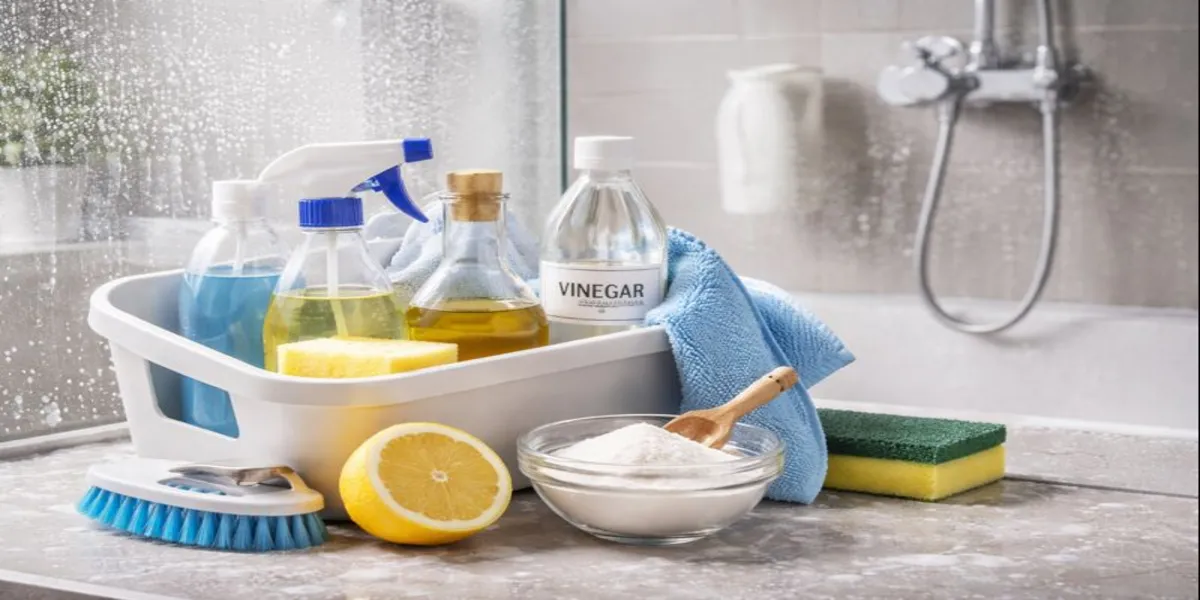
White vinegar is one of the most effective yet the most inexpensive ways of treating hard water stains. It is also acidic in nature and soluble in mineral deposits and the majority of the surfaces in the bathrooms do not get damaged by it. In the case of taps and showerheads, a cloth should be dipped into vinegar and cover all the stains. Let it sit for twenty minutes or so that the acid may loosen the minerals.
Soak, after which a sponge or old toothbrush should be used to clean and rinse with warm water. Spray vinegar on the glass doors and mirrors and after a minute, wipe the surface using a microfiber cloth. And you’ll see the haze off and the gloss come back nearly in a moment.
4. Baking Soda to Removing Soap Scum
The residue of the soap requires a mild yet efficient cleaner, and baking soda is a very effective product. It slices greasy residues and is soft enough not to scratch surfaces. Add a small amount of water to baking soda and create a paste and place the paste over tubs, tiles, and shower walls.
Service it and leave it alone in ten minutes, which will enable it to raise the dirt. Then scrub very lightly with a sponge or soft brush. The loosening of the paste results in the soap scum being wiped clear. Run under lots of water to demonstrate clean, smooth surfaces which feel fresh once more.
5. Natural Shine Lemon And Salt
Lemon and salt is a very effective combination in case you want something fresh and natural. Lemon juice is used because it contains acid that disintegrates mineral deposits, whereas salt brings light abrasion in difficult areas. Take half of a lemon, sprinkle it with salt and rub it over the stained parts of the tap, tile, and glass.
In addition to cleaning the accumulation, lemon also leaves a nice smell and makes the metal fittings and the ceramic surfaces shinier. It is also good to have, especially during the quick touch-ups when you need of having your bathroom shiny without necessarily using chemical cleaners.
6. At what Time to Hire Commercial Cleaners?
The homemade solutions are not enough to remove stains sometimes. In these situations, commercial hard water and soap removers will do the trick. These products are specifically created to dissolve calcium and soap in a short time and deeper.Many homeowners also prefer professional assistance through expert cleaning resources like professional cleaning services when stains become too stubborn or surfaces are badly neglected.
Use cleaner as per the instructions, leave it a little and clean it off. It is best to always keep the area ventilated and use gloves to protect yourself. Although natural cleaning is effective in terms of maintenance, an expert cleaning person is effective when the surfaces have been left unattended over an extended period.
Conclusion
There is no need to tire oneself with scrubbing to clean hard water stains and soap scum, but rather, one has to employ clever techniques and be consistent. It can be the vinegar, baking soda, lemon, or commercial cleaners, but either way to make dull, unattractive surfaces shine with openness again, the appropriate method can cleanse them to looking spacious and welcoming.