
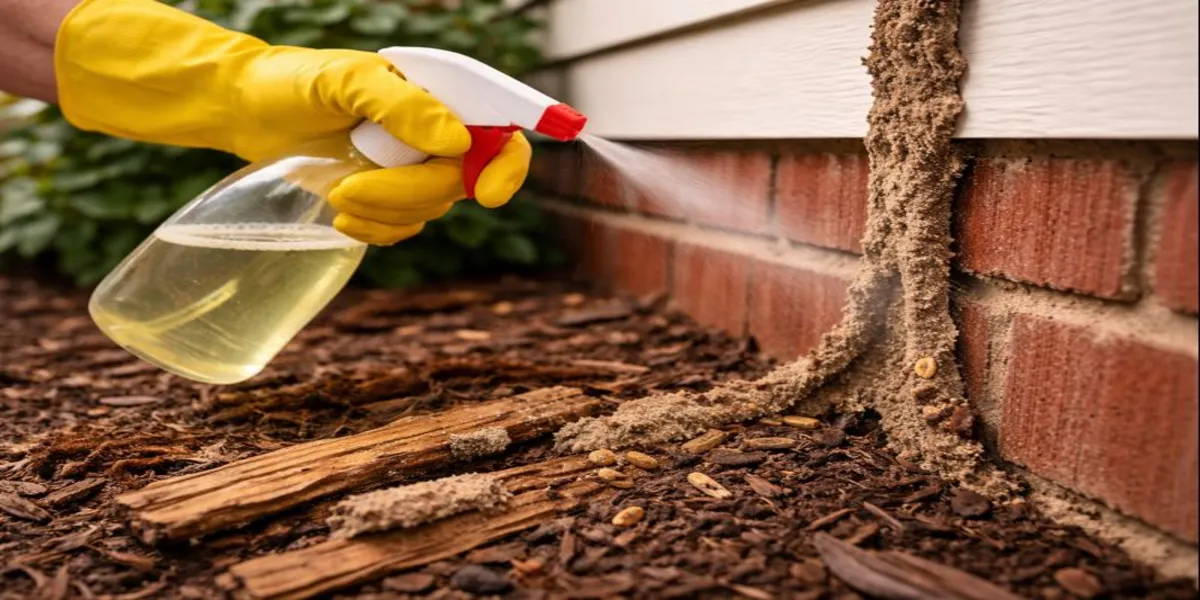
Stop Termites and Protect Your Home from Damage
Have you ever wondered, have you ever wondered, when you came close to a wall or hollow sounding wood, you saw these little tubes of mud, and thought, Could there be termites eating my house? Even the mere idea is disturbing. Termites are referred to as silent destroyers due to the fact that they operate in the backgrounds making damage behind the walls, floors and foundations without anyone being aware until the damage has been caused. The positive aspect is that the destruction caused by termites can be avoided to a great extent.
Rather than repairing your home afterwards or undergoing expensive emergency treatment, an active prevention strategy ensures that your home is secure, healthy and free of stress. Here is a simple step by step guide on the prevention of termites in your home in an easy to understand manner. No technical terminology, no extraneous panic, no convoluted prevention methods, simply laid out, practical prevention techniques.
1. Why Homes are Targeted by Termites?
The first thing in prevention is attraction understanding, also recommended by the professional teams. Moisture, cellulose (wood and paper substances) and easy access are attracting factors to termites. Leaky pipes, damp earth in the foundations area, stacked firewood, cardboard storage and untreated timber serve as invitations. The termites live freely in darkness and on areas that have not been disturbed. Being aware of what will appeal to them assists in eradicating the circumstances that they are fond of to ensure your home is not as appealing initially.
2. Do Not Keep Humidity on the Foundation
Termites are fond of moisture, and a wet soil at the foundation of a structure is the ideal habitat. It is necessary to make sure that there is the correct drainage around the house. Water should be directed away with gutters and down pipes other than accumulating around foundations. Taps, roofs or pipes that leak should be repaired promptly since moisture in the long run tempts termite colonies. Water at the foot of walls should not discharge even so as air-conditioning drainage lines. The drier your home perimeter, the less attractive the termites would be.
3. Keep Wood and Paper Improperly
The termites feed on cellulose in the wood, cardboard and paper products. Piles of firewood placed against outside walls, debris in the form of wood in the garden, or on dumps of cardboard in the damp sheds are easy food sources. The woodpiles should be kept off the ground and also off the house. Mulch should not be placed against the foundation when using mulch in the gardens. By ensuring that storage areas are kept clean, dry and well-ventilated, there is less likelihood of termites getting an easy source of food near your place of residence.
4. Seal Entry Points and Cracks
The fissures in the foundations, walls, or flooring may serve as entryways, even the tiniest. The cracks in the bricks, concrete, and expansion joints should also be checked and sealed on a regular basis to provide a good barrier. Openings around utility lines, cables as well as pipes going into the house must also be properly closed. Termites cannot get access to entry routes, and thus, it is very difficult for them to invade interior structures. Maintenance here is mere prevention, but one that is so mighty.
5. Repairing Wooden Buildings and Furniture
Wooden decks, fences, door frames and window frames are attacked when untreated or kept wet. Exposed wood is secured with the help of suitable sealants, varnishes or termite-resistant coating. Wooden structures that are used outdoors must as much as possible, remain elevated off the soil. Inside the house, one should not put furniture that is in direct contact with wet walls. Frequent cleaning and inspection can be done to identify early damage like bubbling paint, hollow-sounding timber or fine wood dust referred to as frass.
6. Enhance Interior Dampness and Curbing of Indoor Air
Crawl spaces, poorly ventilated spaces such as basements and storerooms, are humid areas which are conducive to termites. These areas are maintained dry by installing adequate ventilation, exhaust fans and curing dampness problems. When condensation frequently appears on the windows or walls, then there is a need to pay attention to the problem of moisture. Air and sunlight are some natural termite repellents, and opening the windows frequently with appropriate weather conditions would keep the places dry.
7. Arrange Regular Inspections of Termites
The termites may even be present in the interior in undetected sections, even when they seem okay. Professional checks are done to identify early warning signs which would otherwise be quite difficult to realise. Regular termite inspections of property (annually or once every six months) offer the confidence that the customer identifies a problem and prevents it from becoming an issue of structural loss. With the help of special tools and training, experts recognise colonies and prescribe appropriate treatments or preventive barriers. Minor repairs are much cheaper than large-scale repairs in the future.
8. Be Aware of Early Warning Signs of Termites
It is the destruction on a massive scale that is averted through early detection. There are some typical indicators, such as discarded wings, mud tubes on the wall, hollow-sounding wood, bubbling paint, and sagging doors and piles of powdery remains of wood. In case any of such warning signs are noticed, one should act at the first opportunity rather than wait to see whether it will resolve itself. Termites do not go away on their own will; they just get bigger in their colony. A quick response will result in the saving of money and structural safety.
Conclusion
Termites are not very large creatures, yet the destruction they can produce is grave and expensive, as highlighted by expert crews. Home control is able to make a home safe against termites destruction by ensuring that wood and entry points are prevented and that there is a better ventilation, knowledge of warning signs, and expert help where required. A safe house is a comfortable, strong and secure house and an ounce of prevention is worth a pound of cure.